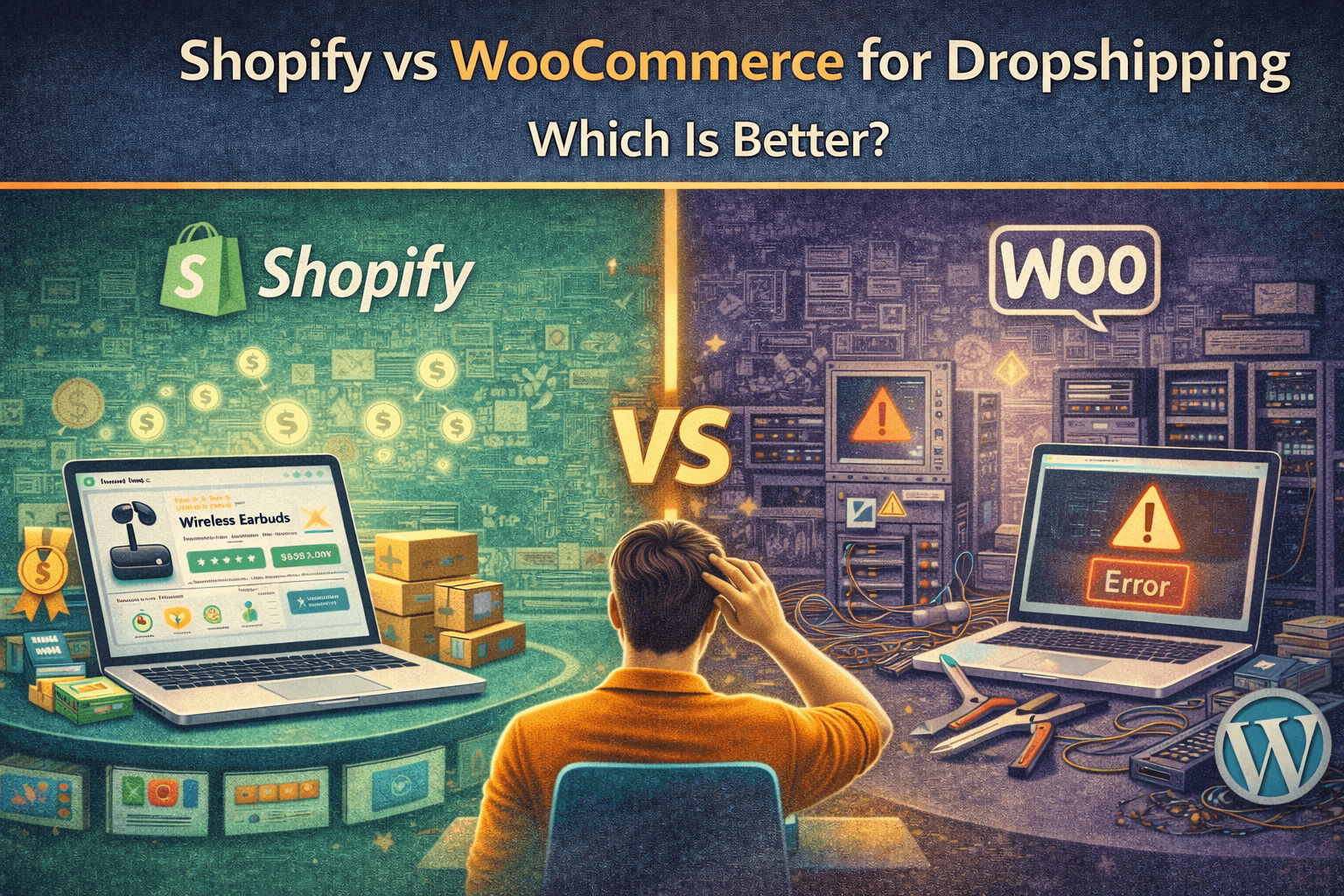
When starting a dropshipping business, one of the first decisions entrepreneurs face is choosing
the platform that will power their store. The two most common options are Shopify and WooCommerce.
Both are capable ecommerce platforms, but they operate very differently.
Understanding the difference between Shopify vs WooCommerce for dropshipping is important because
the platform you choose affects setup complexity, launch speed, scalability, and long-term
maintenance. Beginners often assume both options are interchangeable, but the experience of running
a store on each platform can feel very different.
In this guide, we will break down the practical differences between Shopify and WooCommerce for
dropshipping — including setup difficulty, apps, launch speed, and why many beginners ultimately
choose Shopify when starting their first store.
Platform Overview
Shopify is a hosted ecommerce platform designed specifically for online stores. Everything from
hosting to security and updates is handled by the platform itself. This allows entrepreneurs to
focus primarily on building and marketing their store instead of managing technical infrastructure.
WooCommerce, on the other hand, is an ecommerce plugin built for WordPress. While it is extremely
flexible, it requires users to manage their own hosting, website maintenance, and plugin
compatibility.
For experienced developers, WooCommerce can be powerful. For beginners, however, the additional
technical responsibility can slow down the process of launching and testing products.
Ease of Setup
Ease of setup is one of the biggest differences between Shopify and WooCommerce.
Shopify is designed to get stores online quickly. The platform guides users through store creation,
theme selection, product setup, and payment configuration with minimal technical knowledge
required.
WooCommerce requires more manual configuration. Users must first purchase hosting, install
WordPress, configure the WooCommerce plugin, select themes, install additional plugins, and
ensure compatibility across those tools.
None of these steps are impossible, but they increase complexity — especially for entrepreneurs
whose main focus should be product testing and marketing rather than website maintenance.
This setup complexity is one of the reasons many beginners struggle early in dropshipping,
a pattern explained further in
Build a Dropshipping Store Yourself vs Buying a Ready-Made One.
Dropshipping Apps and Integrations
Dropshipping relies heavily on integrations that automate product imports, order fulfillment,
and supplier connections. Both platforms support these integrations, but the ecosystems differ.
Shopify has a dedicated app marketplace with many tools designed specifically for dropshipping.
These apps simplify product sourcing, inventory syncing, and automated order processing.
WooCommerce also supports dropshipping plugins, but the ecosystem is more fragmented. Many tools
require additional configuration, and compatibility between plugins can sometimes create
technical issues.
For beginners who want a smoother experience, Shopify’s curated ecosystem often makes integrations
easier to manage.
Speed of Launch
Speed matters in dropshipping. The faster you launch, the faster you gather real market data.
Shopify stores can typically be launched within a few days. Themes, checkout systems, payment
gateways, and security are already integrated into the platform.
WooCommerce stores often take longer to launch because the infrastructure must be assembled
piece by piece.
Many entrepreneurs underestimate how much time early setup consumes. Weeks spent configuring a
store delay the most important part of the business: testing products and collecting real
performance data.
Why Most Beginners Choose Shopify
For most new dropshippers, Shopify provides a simpler path to execution. The platform reduces
technical barriers and allows entrepreneurs to focus on learning the fundamentals of ecommerce:
product selection, positioning, and marketing.
Instead of managing hosting, security updates, and plugin conflicts, Shopify users can concentrate
on building a store that communicates value and converts visitors into customers.
This is particularly helpful for beginners who are still learning how store structure affects
performance. As discussed in
What Is a Ready-Made Dropshipping Store?
store architecture and conversion flow play a major role in early-stage success.
Why Ready-Made Shopify Stores Launch Faster
Another advantage of Shopify is the availability of ready-made stores. These stores are
pre-configured with niche positioning, product page structures, and essential ecommerce pages
already in place.
Instead of starting with a blank dashboard, entrepreneurs can begin with a functional store
foundation and move directly into product testing and marketing.
This significantly shortens the gap between idea and execution. In dropshipping, the faster
you reach the testing phase, the faster you learn what works.
While both Shopify and WooCommerce can support successful businesses, Shopify’s simplicity
and ready-made store ecosystem often make it the faster path for beginners who want to launch
quickly.
Conclusion
The debate around Shopify vs WooCommerce for dropshipping is less about which platform is
objectively “better” and more about which platform fits your experience level and goals.
WooCommerce offers flexibility and control for users who are comfortable managing technical
infrastructure. Shopify offers simplicity, speed, and a streamlined ecosystem designed
specifically for ecommerce.
For beginners focused on launching quickly and testing products efficiently, Shopify often
provides the smoother starting point. With fewer technical obstacles, entrepreneurs can focus
on the real drivers of success: product validation, marketing, and continuous optimization.


